writing

You are currently browsing the archive for the writing category.

This past week and a half has been incredibly overwhelming in the best possible way. I can’t begin to thank all of you for the enthusiasm and congratulations I received in response to my book deal; I was truly touched by it, and I feel so lucky to have such genuinely supportive friends. I also realize that I was so excited to tell you my novel sold that I didn’t mention much about the book itself. Where to begin?  

Long before my novel was titled Where We Once Belonged,* in my mind I called it the kidnapping story. I didn’t have characters or a plot yet, but the question of what a kidnapping does to a person and their family is one that I’d carried with me most of my life. Before my family moved from Peru to the U.S., my grandfather was kidnapped and held captive for two months. For years, I knew little about this chapter of my family history—it’s not that I wasn’t allowed to ask about it, it’s just that I rarely did. Maybe I assumed it’d be too painful for my father to talk about the days he spent waiting by the phone for news of his father, or that it’d take my grandfather back to a place no one would ever want to revisit. I let these questions linger for years in silence.

When I started writing fiction in college, I realized that stories are a way to explore truths. For my senior thesis, I set out to finally write the kidnapping story, not knowing if it’d be about my grandfather or about fictional characters, if it’d be about his kidnapping or someone else’s. It came out in surprising ways: first, there was a child, learning about her mother’s kidnapping. Then, there was a woman, caught in the dark in fear. Finally, I got to the husband’s story, and I realized my characters had been keeping a secret from me all this time: they were having serious marital problems. The question of how far Andres would go to save Marabela became far more complex than I’d imagined.

I was a twenty-one-year-old student at the University of Miami when I finished the first version of this story. It was 2006 and I had hopes of publishing it one day, and the support of workshopping writers and mentors who nurtured that dream. But when I graduated I didn’t work on it for months, and soon enough years, until finally the story had simply been tucked away. I told myself I’d get back to it one day; looking back, I think I felt I wasn’t capable of writing it yet.

In the meantime, I worked on a new novel, one that took another four years to write and led to me signing with my agent in 2011. Despite many near yes-es, months passed without it selling, and I knew it was time to work on the next one. While I filled up notebooks with ideas for new books, plots, and characters, my husband E repeatedly insisted: “Why don’t you work on the kidnapping story again? There’s something there.”

He said this so many times I actually started believing him. I pulled out the hard copy of my senior project, did a read-through, and quickly realized it’d need to be completely rewritten.

I started with intense research on kidnappings, ransoms, and the years of terror that swept through Peru in the early 90s. I flipped through old family pictures in hopes of rekindling my memories, and wrote parts of the new draft completely blindfolded. I started asking my family questions about the kidnapping, and learned about the moment my father found out his dad had been taken, about the day he was finally rescued several weeks later, about the way my mother remembered seeing my grandfather upon his return, thinner than she’d ever seen him in her life. And in February of this year, I had the chance to go back to Peru and experience my birthplace from a completely new perspective. I got to hear my grandfather describe his side of the story and how he’d finally made peace with it. Though my novel isn’t the story of my grandfather’s kidnapping, he’s helped shape it, and I’d like to think someone like him would find hope and truth in it.

Of that first completed draft I tucked away in the drawer, maybe 2000 words made it through rewrites and revisions to become Where We Once Belonged. The kidnapping story evolved into the story of a frail marriage tested to the extreme by an unthinkable crime, and the emotional ripple effects felt by the whole family when a wife, mother, and friend is taken for ransom.

I can’t express how much it means to me that I’ll get to share this story with you. It’s come such a long way and helped me grow so much as a writer and a person, and I know that in the next year and a half it’ll only continue to do so. I’m so grateful to each and every one of you for being a part of this journey.

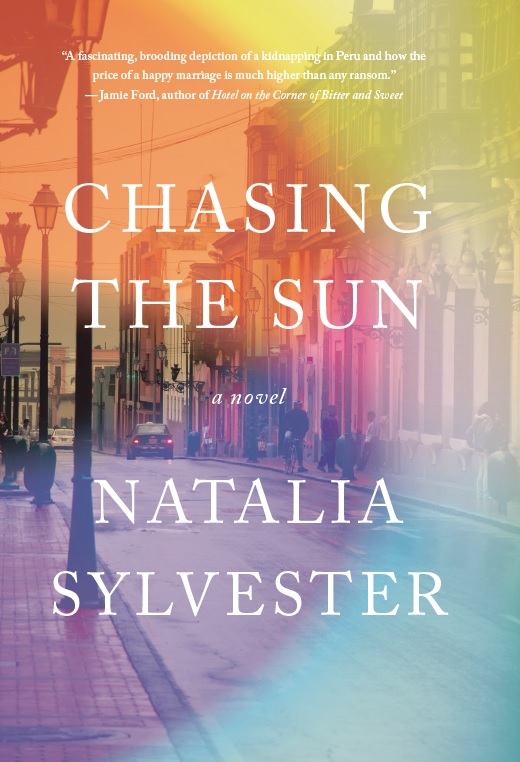
*As of January 2013, my novel has a new title: Chasing the Sun.

photo by: puregin

This is going to be a short post because I’m so excited right now that I can barely type two words without clapping my hands together and getting up to do a happy dance: I have a book deal!!! My novel is going to be published by Amazon Publishing in the spring of 2014! These are words that I’ve dreamed about writing for so long that now that I’m actually putting this post together, all I can think is Oh my god, this is really happening. 

I feel a little bit like Geppetto, in that moment of glee in Disney’s Pinocchio, when he picks up Pinocchio and says You are a real boy! Except I want to pick up the hard copy of my manuscript and toss it through the air screaming, You will be a real book!

I am completely and utterly overwhelmed right now, not just by happiness but by gratitude. I’m convinced my agent, Brandi, is simply one of the most amazing, bad-ass women out there, and I feel so lucky to have had her on my side this whole time; and I could not be more excited to start working with my new editor, who already makes me wish I could reach into the screen and hug her. And (I know I’m not supposed to be writing an acknowledgements page yet, but this has to be said) every single one of you who’s been part of this amazing community I’ve been blessed to find online: words will never express grateful I am for your friendship and support.

I have so much I want to share, but for now I’m going to take the advice of a close friend in my writer’s group: take it all in and revel in this incredible moment.

Watching this clip just now, I realized that as Pinocchio’s transforming, there’s a voiceover that says, “Prove yourself brave, truthful, and unselfish, and someday you will be a real boy.” I love that.


Fresh Ink is a monthly series of interviews with novelists that focuses on the journey to publication. I’m so thrilled to be hosting Erika Robuck, author of Hemingway’s Girl, on the blog today! I remember coming across Erika’s blog, Muse, sometime in early 2010, because I wanted to learn more about publishing and find a writing community. I lurked for a bit, and when, months later, I joined Twitter and started blogging, Erika was one of the first people I followed. 

At the time, Erika had self-published her first novel, Receive Me Falling, and had chosen to pursue traditional publishing for her next novel. It’s amazing what blogs and Twitter let us be witness to now. Over the last two years, I and many of Erika’s fans have had the pleasure to cheer her along as all the stages of the publishing process unfolded for her—from the moment she finished the first draft of Hemingway’s Girl, to when she asked for advice on title ideas on her blog, to when she signed with her agent and announced her publishing deal. 

Hemingway’s Girl debuted last week, and it was every bit as breathtaking and beautiful as I always imagined it’d be.

Length of time from book’s start to pub date: 3 years

# of agents you queried before signing: I blasted 20 for this novel.

# of books written before this one: 1

# of revisions you went through: Personally, 10. With agent and editor, 3.

We’re lucky that there are so many great resources for writers to learn about publishing these days. That being said, what’s the one aspect of the process you never could have predicted?

I couldn’t have predicted the torrents of wonderful feedback, reviews, and attention that came from a decade of work and relationships. For so many years I was my only audience, I blogged about other books, I read other reviewers, I supported other writers. Now that I have a book coming out, I never could have foreseen or anticipated all of the beautiful goodness that has come back to me. Most days, I never thought it would. It is incredibly gratifying and humbling.

Before selling HEMINGWAY’S GIRL, you self-published your first novel, RECEIVE ME FALLING. In what ways do you think that experience prepared you for the traditional publishing experience? Are there any parts of the traditional route that feel like new “firsts”?

Self-publishing taught me so much about marketing plans, production, and platform, and what I learned has been invaluable now that I have a traditional publisher. Also, the book clubs and contacts I made self-publishing are in place for this book launch, which I think has made a big impact on pre-orders. What is a first in traditional publishing is all of the exceptional professional collaboration. It is a monumental team effort, and I feel like my product is of a much higher quality with all of these experienced people guiding me. I couldn’t ask for a better team.

Your books (plural! I’m so excited for your new two-book deal!) combine literature and history by bringing to life classic writers as characters in a fictionalized world. What keeps pulling you back to this style of storytelling?

I’ve always been obsessed by the past, particularly by artists in the past, and I want to enliven other people and periods for readers. Also, historical figures haunt me. Truly.

I’m intrigued by how much research it must take to create a whole novel based on the life and imagined life of writers as characters. What comes first—do you choose writers you’re passionate about, and therefore already very familiar with, or writers who strike a curiosity in you to learn more about them?

 Both. I have been passionate about Hemingway since taking a college course studying his literature. In researching Hemingway, I became intrigued by his hatred of Zelda Fitzgerald. That led me to her work, and back to F. Scott Fitzgerald, who I also love. In both cases, however, what I thought I knew was blown wide open and expanded in ways I couldn’t have foreseen. It makes for a very exciting research process.

Do you think there’s a difference between the persona of a writer and who they truly are as a person? If so, how did you research Hemingway as a person? In what ways did you have to fill in the blanks, and how did you approach this?

Read the rest of this entry »

I’ve never been a runner. Sprints, long-distance, relays…I wasn’t having it. But my sister was in track and field through much of middle school and high school, and there was this one year when my family spent every weekend attending her tournaments. The home tournaments were my favorite, because the announcer was my history teacher—an amazing, hilarious man who moonlighted as a DJ at an oldies radio station.

The runners would take off with much fanfare from him. Always, towards the middle of the race, he’d get a little quiet, or he’d take the time to joke around with the crowd. But then, as they approached the last turn, his voice would fill the stadium as he shouted “And down that final stretch they goooooooooo!”

I’ve been thinking a lot about him lately. I hear his voice constantly because E and I are approaching the final turn in a big journey we started two and a half years ago. In early 2010, E and I packed up and moved from Miami to Austin to start a new life. We left family and friends in Florida looking for new opportunities that our hometown was no longer offering us. E decided to put his career on hold and go back to school full-time. I’d been freelance writing for a few years by then, but I wasn’t confident that I could support us both on our own.

I made a deal with myself: if I couldn’t support us both on my income by the first six months in Texas, I’d start looking for a new job. It was terrifying at first; my goal had always been to write for a living, but up until then, though my writing income had contributed to our lifestyle, it hadn’t been what maintained us. And you know, I had this book I wanted to write, this dream that’d always been “on the side.” I worried that I’d get so consumed by financial worries that my novel would get pushed past the side to some dark, untouched corner of my mind.

To say these past two and half years have been intense would be an understatement. E and I have worked practically nonstop to make this happen. We share an office now because when he’s not at school, he’s at home doing schoolwork, but many days it feels like we’re ships passing in the night, so focused on the project at hand that we forget everything else. We take small breaks together, for lunch or for a quick embrace, and then we get back to it. At least once a week, E pulls an all-nighter, going to bed at 4 only to be up at 7 for class again. His semesters last 11 weeks, and then it all starts back up again.

Except in 2 weeks, it won’t. Read the rest of this entry »

Fresh Ink is a monthly series of interviews with debut novelists that focuses on the journey to publication. It went on a bit of a sabbatical this summer, but I’m excited to say that the interview series is back and getting started up again for the fall!

Today’s interview is with Natalie Bakopoulos, author of The Green Shore, the story of four family members in 1960s Greece and how their loves and lives play out against the backdrop of the military dictatorship. Here Natalie discusses the nature of imperfection in art, the truths created by fiction, and the one piece of writing advice she most often gives students.

Length of time from book’s start to pub date: 8+

# of agents you queried before signing: 1

# of books written before this one: 0

# of revisions you went through: Too many to count, and many of them brutal. Probably ten major ones, but I don’t always revise all the way through so it’s hard to count drafts. There are some scenes I probably rewrote more than thirty times; other scenes that went through similar revision and then I ended up cutting them from the book anyway.

We’re lucky that there are so many great resources for writers to learn about publishing these days. That being said, what’s the one aspect of the process you never could have predicted?

How long it takes! Even when you think you’re done, there’s always more to do. A book can always be better.

I read on Simon & Schuster’s New Fiction page that The Green Shore took seven years to write. I know many authors who could relate: a book takes as long as it takes. How did yours evolve from start to finish? Do you feel the book matches your initial vision for it, or did the story, characters, or plot change along the way?

The characters are the plot, in my opinion. So as I write them, as they have things to face and decisions to make, the plot emerges from the characters.

I’m happy with the way the book turned out in that I think I wrote the best book I could write at the time. I gave it everything. But I think the initial vision is always far more grand, more epic, more wonderful. And then our own selves get in the way.

Zadie Smith wrote an essay called “Fail Better” that ran in the Guardian in 2007, when I was right in the middle of drafting, and I found it hugely comforting, not to mention imbued with her usual brilliance. She refers to something she calls the “map of disappointments”: “a suitable guide to the land where writers live, a country I imagine as mostly beach, with hopeful writers standing on the shoreline while their perfect novels pile up, over on the opposite coast, out of reach.”

Perfection is always out of reach, in a sense, but we do have to look toward it. People sometimes argue that there are indeed some perfect novels but I’m not sure I agree. Simply because I think the nature of art is imperfection. But I remember reading the film director Darren Aronofsky talking about Black Swan and the characters’ strive for perfection. He said that in order to achieve it you have to allow madness and chaos into your life. I agree, and would add that you have to add madness and chaos into the work.

What was the research process like for you while writing The Green Shore? How did you strike a balance between staying true to history and true to your characters’ stories? (And did these things ever contradict one another?) Read the rest of this entry »

It’s been very quiet on my blog, and very busy in my life, in ways I hope to have a moment to reflect on soon. In the meantime, it turns out I have several blog posts that I wrote months ago and never published. Do you have a “drawer” for blog posts? Why not pull one out of there and share it? I’ll start.

We were playing a game the other day. While E, a few friends and I helped someone move,  (and while we waited by the truck for them to buy some twine) E tossed out the question:

If the apocalypse came, and you could only take five people to help you survive, who would you choose?

The first few suggestions came quick and easy: an engineer, a doctor, a farmer. That way we’d have the basics, like health, food, and a structurally sound shelter. After that we were stumped, so I suggested a writer. I wanted to see how everyone would react. We had a good laugh about it, because I was obviously trying to put in a good word for myself in case the end of the world came. In emergencies, no one ever asks if there’s a writer in the house. No one would starve if we stopped planting the seeds of our stories.

But as we lugged furniture on and off the truck I couldn’t stop thinking about whether or not we’re essential. It definitely feels that way to us; many of us couldn’t stop writing if we tried, or we’d argue that never being able to write again would mean an unfulfilled existence.

I plan on arguing for the inclusion of writers in the top 5 the next time we’re sitting on a curb in 105 degree weather, and I need your help. Here’s the list I’ve started so far:

1. Writers know a lot about a lot of different things. Or maybe not a lot, but enough to get around. For my fiction as well as my fiction writing, I’ve researched beekeeping, midwifery, how to grow truffles. I’ve interviewed aviation specialists and drag queens and meteorologists who let me tour the National Hurricane Center. There’s so much random trivia in my head, it’s bound to be useful at some point.

2. A writer can build entire world out of nothing but ideas and years of hard work to perfect those ideas. They live off of dreams and imagination. They’re no strangers to starting from nothing.

3. Writers record the memory of human existence. Without memory or history, the present and the future are only fleeting moments lost the second they pass.

Who would make your list of 5 people? What would you add to the list of reasons why writers are essential?

photo by: Andrew Mason

The journal that I keep has a story that’s only half mine to tell. It was a gift meant to be shared, words meant to be passed back and forth betweeen friends who thought they’d last forever. It saw its first scribbles back in December 2002, but I wasn’t the first to write in its pages.

This story is about a brief, beautiful friendship I shared with someone I’ll call Gina. Even though Gina and I met my sophomore year of high school, we passed in and out of each other’s lives for three years before becoming exactly the friends we needed at a very specific time in our lives. Our friendship was intense but short-lived. We were alike in ways we didn’t recognize until we served as mirrors to one another. We were both writers. We loved the same music, the same songwriters, the same words and ideas. But we were also very different in ways that helped us grow. We saw each other exactly as we were: two little girls, (18, really) discovering the world, reporting back on all the adventure, confusion, and occasional heartbreak it brought our way.

Even when we both went to different colleges, Gina and I kept in touch daily. At night I’d email her the poems I wrote that day, and I later learned she’d printed and pasted them on her dorm wall. She’d send me songs she wrote and I’d listen to them as I drove around my new town. Our lives were separate but parallel, and because of this we made each other feel understood.

For Christmas, when we were both back home in Miami, Gina gave me this journal. Except for the first few pages, it was completely blank and unlined, a perfectly bound 10 x 13-inch book covered in navy canvas. She wrote me a letter in it, explaining that this book would be a represenation of us, of who we are today, who we were before we met, and who we’re starting to become.

It was meant to be a book of our thoughts, our poems, and words from books that we wanted to hold close. She wanted us to open its pages years later and see the growth, and acknowledge how strong and happy we are, always, after all.

I wrote back to her in the book just once. I drew a picture of our lives in the small moments when they’d intersected, like two threads being tied together and then pulled apart, but always coming back to each other. I never thought this pattern would break.

Months later, something happened. Depending on who you ask, it happened slowly or overnight, but regardless, we never spoke again. I won’t get into details because as time passes, I realize how little the details really matter. Our friendship was all about growth and we grew so much it tore us apart. The pages remained blank for nine years.

Last summer, I found the notebook in my storage closet. I was looking for a place to start over with my thoughts. I needed the blank page, and this book still had so many left. So I started writing again, nine years later, as if nothing had ever happened. I told myself this journal simply had two stories—one that started, but never found its ending, and the other that picked up, miles and years from where the last left off.

In the time since I started filling those pages, I’ve drafted novels in this journal and pasted interesting newspaper clippings into it with seeds for future stories. I’ve written letters to and from my characters in it (but never one to Gina). I’ve jotted down notes for work, brainstormed titles for books, sketched outlines and timelines for plots and subplots.

What I didn’t do for a long time was look back at those first pages. Sometimes I’d wonder what someone would think about that nine-year gap if they found my journal in the future. Would they read the words of two 18-year-old girls so full of hope and promise, and wonder what happened to the original storyteller? I’d wonder if they’d blame me, and then I’d wonder if I blamed myself. I never let myself think about it long enough to come up with an answer.

But I went back to the beginning and read it the other night. I realized it’s all one story. It’s the story of a friendship, lucky enough to be captured in writing even though it was ephemeral. I no longer fool myself into thinking the ending involves apologies or reunions; we’ve become the people we were meant to be, and I doubt we’d get along now, even if our history was wiped clean. But this book is like the Venn diagram of us, a brief representation of a moment when our stories overlapped, embraced, and moved on.

Now when I look back at those pages I’m reminded of why we write. The story will always be there; the words won’t fade like our friendship did. These pages were meant to be a gift and they have been, even if they never became what we thought they would. Those first words carry a hope that she and I never lived up to, but they’re still full of hope. They’re a reminder of who we once were, of the kind of friendship that can exist in this world, no matter how fleeting. It’s proof of how strong and happy we are, always, after all.

photo by: Urban Muser

This post was five seasons in the making, fermenting over the years as I’ve watched AMC’s Mad Men and been left speechless, over and over, by how well-written it is.

A warning: although I’m a couple episodes behind this season, this post may contain spoilers for those of you who haven’t caught up yet, either.

But there’s a moment in a recent episode of Mad Men that I just have to write about. Not just because the writing’s perfect, but because it shows what makes great writing. It’s all in the choices we make. The writers could’ve chosen to go one way. They went another. And that (as Robert Frost would say) has made all the difference.

To set it up, Sally, Don Draper’s pre-teen daughter, is tagging along to a gala in which her father is receiving an award. Don’s partner, Roger Sterling, is going solo, so he takes it upon himself to be Sally’s date. It’s adorable, and innocent, and throughout the night as Roger teases her about how she’s had too many “drinks,” how she needs to help him remember people’s names,  and how pretty she looks, it’s clear that Sally’s enjoying it. What little girl doesn’t want this kind of attention? She’s at that age where she’s anxious to be a woman, but too young to truly understand everything that comes along with it. She basks in the illusion of being the apple of Roger’s eye.

But of course there are other women at this party, and one in particular who clearly has her eyes on Roger. They drink, they flirt, they end up sneaking away to an empty room, where conveniently enough, there is a lone chair for Roger to sit back on and enjoy as the woman pleasures him. Poor Sally wanders off and catches them, then quietly sneaks away undetected and dumbfounded.

That evening, while everyone’s asleep, she calls a friend, her one true confidant. Since she’s staying with her dad in Manhattan, her friend asks how the city is. Sally answers with only one word.

“Dirty,” she says. And the episode ends there.

Most shows would’ve had that conversation play out very differently. They would’ve had Sally tell her friend about what she saw, and how it made her feel. But in one word the writers of Mad Men not only got it across, but they kept me thinking about it after the show was over. Days and weeks later.

Because they chose not to tell us everything, they left me with so much to think about. I admire this kind of writing because these choices aren’t easy to make. We wonder if we’re giving the reader (or viewer) enough when we go the subtle route. We worry that they’ll draw the wrong conclusion. If we don’t draw them a map, will they get to where we want them to go? But if we do, won’t it be a boring, unpredictable journey for them?

Great writing is carefully crafted to leave just the right amount of hints. But even then, not everyone will interpret them the same way. That’s part of the beauty of writing and being read: the work is a breathing thing, it’ll take on a life of its own (many lives) depending on who’s reading.

As writers we can only control how the story’s told, not how it’s read. We have to make a choice to focus on what we can control: the writing (always the writing).

Fresh Ink is a monthly series of interviews with debut novelists that focuses on the journey to publication. I’m so excited for today’s interview with Jennifer Miller, author of The Year of the Gadfly, which debuted just yesterday. Jennifer stumbled upon this blog about a year ago and emailed me to say hello because we’re both represented by the same agency. At the time, she’d just finished submitting final edits to her editor, and I’ve so enjoyed cheering her on from the sidelines as time crept its way closer to her launch!

Jennifer and I spoke just weeks before her pub date—about the writing process, the choices she made while developing her novel, and her advice for aspiring authors…

Length of time from the book’s start to your pub date? 7 years.

# of agents that you queried before signing? I only worked with one agent on this book, but I’ve worked with two agents in my career.

# of books written before this one:  Just one. Inheriting the Holy Land, which is non-fiction.

# of revisions you went through: Too many to count. It was a work in progress the entire time.

We’re lucky that there are so many great resources for writers to learn about publishing these days. That being said, what’s the one aspect of the process you never could have predicted? 

It’s just really interesting to think about the difference between starting to promote this book and promoting Inheriting the Holy Land, which came out in 2005. I felt like back in 2005 there really wasn’t very much that I could do, and I kind of just had to leave it up to the publicity and marketing department. But now, I find that there’s so much that I can do that I never expected. Not just being on Twitter, but Facebook, just being able to connect with all these book bloggers that I previously never knew existed. Connecting with people on Goodreads, which I’m really making an effort to do, every day pretty much. And starting a correspondence with readers around the country, or potential readers around the country, who I may never have had access to back in 2005. I can actually do outreach.

Most of the people I’ve interviewed on the blog are debut authors. But this is really your debut fiction. Are there any ways that you feel that this prepared you? Either in the publishing process or the writing, going from a non-fiction author to now a fiction one?

Yeah, that’s a great question. I would say that, in terms of preparation, I definitely—because I wrote a book before—I knew I had the stamina to write another book. Inheriting the Holy Land, I recorded in six months, and I wrote it in six months, and it was done. This [novel] was obviously a seven-year process. So I knew that I could do it. I knew that I could produce content of that length. And so that definitely helped me.

Even though I published a book before, and I had an in into the publishing world, it actually didn’t, in a lot of ways for me, didn’t make it any easier for me to write this book or sell this book or anything like that. If anything, if your first book doesn’t do well, then you’re at a disadvantage for your second book. And honestly, this novel, part of the reason I think that I was able to get it published is because I did switch genres. The research book got really great reviews. It didn’t really sell very well. And I remember the publishing company asking me for sales figures. They’d already bought the book. They wanted sales for the last book. I was like, (jokingly) “I’m not giving you the sales figures. If you really want to find them, you can go find them.” It’s all part of like how—you hear this about authors failing to sell a book, and then having to publish under a pseudonym because if a book doesn’t sell well, you kind of have a mark against you. And I hate that. My suspicion is that because I was switching genres, they saw it as I’m starting over in the eyes of the publishing world. If that makes sense. I don’t have that mark against me because I switched genres. It’s a totally different—fiction is very different than non-fiction.

That’s interesting, because I was reading in your post on Writer Unboxed how your previous agent had mentioned that switching to novels would be a bad career move. What kept you going? Because even if the previous book didn’t do well, you do write a lot of non-fiction. You’re a journalist, and you’re very well published in that arena, so what kept pulling you toward fiction? What do you feel feeds you in the process in a different way than non-fiction?

I still love non-fiction and journalist stuff. I still would love to write another non-fiction book. But I’ve always, always, always wanted to write fiction. And I’ve always wanted to write a novel. I’ve always been in love with stories, and with characters, and with compiling a narrative. So I knew that this was something that I had to do.

And once I got into the process—I’m a private person. I’m a little bit obsessive. Once I get started on something…once I decide that I’m going to be invested in something, I really can’t stop working at it until it’s finished. Or until I feel like I’ve succeeded. Which is why was able to continue to do this over seven years and write five or six drafts. Because I just can’t stand to know that there’s a draft of something sitting on my computer. It sucks. I hate that knowledge in my own head. I have to keep working at it to make it better.

How did The Year of the Gadfly evolve from those initial drafts to what you ended up with? And what do you feel took you down that path?

An intro of the book: the book has three narrators. The main narrator, Iris Dupont, who’s a young teenage journalist, she actually did not exist until a couple of years ago. She was the very last addition. Which gives you a sense of why there were so many drafts of this book.

Initially the book was about two characters. It was about Jonah and Lilly. Jonah is this microbiologist who experienced a tragedy when he was a kid and runs away. And then the other main character is…this albino geek girl named Lilly, who is the daughter of the school principal. Jonah is closely based on my younger brother, who, like Jonah, is a scientist. And then Lilly is actually very much based on me, because the guy that she dates in the book is based on my boyfriend in high school, who was killed in a car accident the summer before our senior year of high school. And I knew that I wanted to write about that experience, and I wanted to write about my boyfriend, because he was a very, really an extraordinary person. And as I wrote, the book kind of started turning into a mystery, started turning into a novel in which basically the characters are running away from their past, and various events start calling them back to face up to the things that they swore they would never face up to.

I realized at a certain point, they needed a vehicle to push the plot forward—I was really focused on the back story. I was really focused on the past and what happened to these characters in the past, and what they were running away from. And at a certain point it occurred to me that it’d be awesome to have an investigative journalist, because that’s inherently cool, to have a character whose job it is in the narrative to start uncovering things. Walking into things and meeting, and trying to pull out people. So that’s really where the character of Iris Dupont came from. And she emerged after I went to journalism school. And I think if I hadn’t been to journalism school, I might not have even thought to create her.

That’s why she came really late to the process. But obviously I didn’t just want Iris to be a tool. I wanted her to be a well-rounded character in her own right. I wanted her to have her own story, and her own challenges, and her own problems.

She sounds so cool. I love the idea of her communing with the ghost of Edward R. Murrow. I wondered where that came from. At what point did it occur to you and why did you feel like it fit her and fit into the story?

Iris has this ideal about truth with a capital T. And the beginning of this book for her is really about exposing the truth above all else.

So the reason I chose Murrow is because Murrow, in a lot of ways, he is the ideal representation of truth. He is the heroic figure who will be true to power, who will go up against McCarthy, who will basically always stand up for his ideals and for the importance of free speech. He seemed like the perfect person for Iris to obsess over.

At the same time, Murrow was actually a very broad figure with a lot of demons and his own past. I wanted the realization of Murrow’s ideal versus Murrow the human being to also be part of Iris’s growth over the course of the novel. She was idealizing him, and at a certain point she has to start seeing him as a real human being who is just as flawed as everybody else.

The other reason I chose him is because I just wanted a really sharp juxtaposition between 14-year-old prep school girl, and then you’ve got 50-year-old, chain-smoking Edward Murrow. I just love to kind of bring those two opposing figures together and see what would happen when they’re forced to talk.

I was reading how you teach writing as well. What’s a piece of advice that you give most to students?

The thing that I emphasize…is that the ideal is to communicate what you want to say in a clear and straightforward way. You want things to be accessible. At least I want the literature that I read to be accessible. This isn’t to say that all writing has to be that way. I actually really do enjoy Joyce, and I enjoy Foster, and people whose writing is actually not accessible. But I think that just like any sport or creative field, or art, or whatever you do, it’s always about practicing and honing your skills and getting down to basics. And I think that that’s true with writing, too.

Know the rules, and then break them. Especially for writers who are just starting out – and I’ve done this plenty myself – there’s this tendency to just completely overdo it. To write these long, complicated, flowery sentences that you think sound fantastic, but actually don’t say anything. So for myself even, I’m always trying to simplify my language, even in my fiction.

Is there anything I haven’t asked you that you want to mention?

I would just say to anybody who really wants to write and is trying to publish a book and is feeling frustrated—I talk to a lot of writers about this, and there really is a general consensus of some of my friends that if you just keep doing it, and you just stick with it, you’re going to have some kind of success.

It’s just that it’s very much a marathon and not a race. I remember so well the afternoon that I got up in front of my agent, I had just finished a draft. The first time that I finished a full draft of Gadfly and she read it. And we got on the phone and within five minutes, she had told me that the second half of the book had to go entirely and the first half of the book needed serious reworking. And she was right. She was absolutely right. And that’s the other thing. Be open-minded. Find a reader that you trust, and don’t be defensive when they tell you that you have to throw out half your book.

At that point, I could’ve easily been like, ‘You know what, I did a lot of work, but I’m done with this. I’m tired, I’m done. I’ve already been working on it for five years. I don’t have the stamina to keep going.’ The thing is that you’ve got to keep going. You have to see that criticism as an opportunity to improve. And then keep working at it. Keep doing it, and eventually you’re going to get to the good product.

Thanks so much for the great conversation, Jennifer, and congratulations on your fiction debut!

About The Year of the Gadfly:

Iris Dupont is a teenage reporter who communes with the ghost of Edward R. Murrow.  Jonah Kaplan is a failed microbiologist-turned biology teacher who is haunted by the ghosts of his past.  Each embarks on a private investigation to uncover a secret society in their remote New England town.  As Iris and Jonah’s paths start to intersect, they are drawn into the darker corners of their town, their school, and their own minds.

Just a quick post to let you all know that I’ve entered my blog in the Goodreads Independent Book Blogger Awards, and I would so appreciate your vote!

Four winners will be chosen from four categories (Adult Fiction, Adult Non-Fiction, Young Adult & Children’s, Publishing Industry) and will receive a trip to attend Book Expo America NYC in June. Voting closes Monday, April 23 at 11:59 p.m. eastern. Vote, help spread the word, and discover some amazing new blogs while you’re at it.

Here’s the link where you can vote for this blog:

CLICKY-CLICKY

And here’s the hug I will owe you forever and ever. 

httpv://www.youtube.com/watch?v=B9v0SYn7T8w

Related Posts Plugin for WordPress, Blogger...

Tags:

« Older entries § Newer entries »