I joined Twitter more than 3 years ago, rather begrudgingly, when I realized that many of the people whose brains I wished I could pick—authors, editors, and agents—were basically offering up their thoughts for the picking, in 140-character tidbits. I can tell you that I probably learned about 80% of what I now know about publishing through Twitter or through blogs and sites I found because of it.

And this was me, starting from scratch. It was me having nothing more than an idea and a draft of a book. The how to write a query letter, the how to find an agent, the what it means to go on submission and how to get a book deal…all that knowledge in some way came from Twitter. I learned about writing conferences because of Twitter. I turned online connections into real-world friendships with other writers because of it.

And yet, out of all the things I’ve learned about writing and publishing from Twitter, the most valuable lesson didn’t come from the agents, editors, or authors I followed.

It came from the aspiring authors. The ones who, just like me, were starting out with not much more than their words and a dream they refused to give up on.

Now that it’s been more than 3 years, I more or less know how to spot them.

They’re the ones who Tweet at 3 in the morning that they’ve got four chapters of revisions left of their third draft…and then stay up to finish it.

They’re the ones who Tweet they just had a major breakthrough with a character, and even though this means they’ll have to rewrite the first half of the book, it doesn’t matter because it’ll make the story stronger.

They have moments when they question their sanity, whether all the writing, and re-writing, and soul-searching, is worth it.

(They always come back, a day, a week, a month later, to the page, despite there never being a guarantee that it will pay off.)

They often Tweet links to interesting articles, either about writing or publishing or whatever else they’re passionate about, because they know learning doesn’t happen in a vacuum, and they keep their minds open and thirsty for whatever knowledge they can find.

Eventually, they finish their work-in-progress, and they take a moment to celebrate, to announce it to their friends on Twitter, who likewise cheer them on because they know what a big step this is.

Then they get back to it. To the work. They start querying agents, or they start looking into their options to self-publish. The paths are varied now but the dedication is a constant. They wait, and they get rejected, and they keep going.

Here’s the part that never fails: One day I’ll be getting my morning cup of tea ready, and I’ll log onto Twitter, and I’ll see that one of these writers has a Big Announcement. They’ve signed with an agent, and there’s usually a blog post they’ve written about all the details, and I eat these up because these stories never get old, the excitement of seeing someone who’s worked so hard for something finally take such a huge step toward accomplishing it fills me up entirely. It’s what inspired me to keep going when I wasn’t there yet. It’s what fuels me on days when this journey still has its difficulties.

For a while after the Big Announcement, there’s some silence on the publishing updates. Maybe this writer has gone on submission, and though internally they’re a complete wreck, they remain cool and composed on Twitter. I totally get that.

It might come months later, it might come even a year or two later, but this writer gets there. One day I log on and they’re announcing their book deal. And months later, the cover reveal. And then one Tuesday it’s their launch date and the Twitter stream is full of congrats and happy pub day wishes and on days like this I remember those 3 a.m. Tweets, the tiny moments of celebration because Chapter 11 was almost ready for another revision, and I’ll think, They worked so hard for this, it was only a matter of time.

I’ve witnessed it time and again, and it never fails. I can’t even count the number of books that are already published, whose authors I once saw on Twitter, just working from scratch to make it happen. I saw it happen plenty of times before my book sold, and I’ll admit there were days when I wondered when my turn would come, but I refused to let my insecurities diminish my support and happiness for a fellow writer and friend. I see it happen still (for example, to Annie Neugebauer and Ben L. J. Brooks, who recently signed with an agent, or Amy Sue Nathan, whose debut novel, The Glass Wives, launched last week) and it reminds me of the power of a good story and perseverance.

This is what I’ve really learned from Twitter: what the writer’s life looks like, what determination looks like. How to spot the life cycle of success.


photo by: Ed Yourdon

Here’s something you may not know about me: I have a terrible sense of direction. It’s so bad that when I’m looking for an address without my GPS, I’ll stop and think, “ok, I get the sense that it’s this way.” And then I’ll go in the exact opposite direction. No joke. It’s worked so many times it’s scary.

I get angry with myself when I get lost. I hate wasting the time, the gas, the mileage. There are times when, no matter how well I’ve planned my trip, something goes wrong. My GPS loses signal. Google thinks the restaurant I’m looking for is at the bottom of a lake. I assume that since I’ve been to a place before, it’s time I start winging it, looking for a shortcut.

What else can I do but keep driving and find my way, eventually? Sometimes, I even find something better. People say getting lost is a lost art but, oh, no no no…I will always be a master.

I’ve been thinking a lot about this lately as I write. I can tell when I’ve been stalling, knowing there’s this one difficult scene that’s playing out in my head, knowing it hasn’t completely come together yet but convinced that if I think about it long enough, I’ll figure it out.

I’ve sat down to write before with a map. I’ve sat down to write before with no sense of direction at all.

I can tell you there’s no right or wrong way to do it, so long as you actually go instead of just sit, parked in the driveway.

We find our way in the doing, not the planning.

photo by: Anton Novoselov

I’m honored to be guest posting today at the Women’s Fiction Writers blog about a topic that’s very close to my heart: what we can do to support women’s fiction and women authors. If you’ve recently read about the VIDA 2012 count or Wikipedia’s subcategorization of women’s authors, you know that women’s equality is something that hasn’t caught up to the literary world yet. It’s a complex problem with no simple solution, but I’m happy to see that the conversation seems to be gaining momentum. I hope you’ll head over to the blog and add your voice to the mix!


We used to have this saying in my family. Let’s say my mom asked what I was going to do that day, and I responded that I thought we were going to clean the house (or something to that extent), she might joke that “‘We’ is a lot of people.” Meaning that “we” is really an “I”, a way to tease that I was on my own on this one.

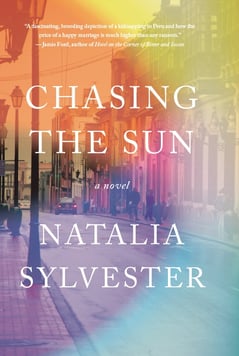
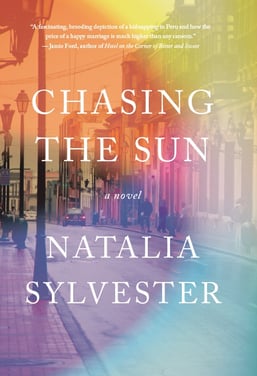
It was brought to my attention that I’ve been using this “We” a lot lately. Earlier this month, I went to New York and met with my agent and editor, and I had the most amazing time getting to know them better, brainstorming ideas, making plans for Chasing the Sun, and just letting myself get immersed in talk of books and edits and writing and publishing.

One evening I was having dinner with a friend, who introduced me to his friend as an author with a book coming out soon. This friend was excited, and asked me lots of questions like what the book is about and when it comes out.  I responded, “We don’t have a set pub date yet, but we’re planning for Spring 2014.”

“Oh, did you write the book with your husband?”

Me, confused: “What?”

“You keep saying ‘we,’ so does that mean you co-wrote it with someone?”

I laughed and explained that by “we” I meant people like my editor and my agent and my publisher’s PR/Marketing team. I told her that this stage of publishing is such a collaborative process that “I” had quietly snuck out of my vocabulary.

I is for rough drafts and second and third drafts and revisions done early in the morning when no one else in the house is awake. It’s for moments when you know no one but you will care if the book never gets written. It’s for times when we’re writing in the dark with no voices in our heads but our inner critic and our characters. It’s a beautiful and necessary part of the process.

But “we” is also pretty magical. It’s a time for support and new perspective and growth when you’re pushed beyond your comfort zone. It’s shared excitement and anticipation that feels easier to bear now that you’re no longer in it alone. It’s putting yourself out there and surrendering control and trusting in others.

This week I sat down and wrote my acknowledgments page (did I ever tell you how much I dreamed about getting the chance to do that?) and there were so many “we’s” to thank I was practically in tears by the end of it. I thought of all the roles we play in each other’s lives, the big and small ones that we may or may not know about. The everyday moments that make a difference years later.

It was overwhelming. “We” really is a lot of people, and for that, I am ever so thankful.

photo by: SOCIALisBETTER

Fresh Ink is a monthly series of interviews with debut novelists that focuses on the journey to publication. Please welcome Melanie Thorne, author of Hand Me Down, a powerful novel about a teenager’s enduring strength as she searches for a safe home for her and her sister after her mother’s choice to live with an ex-con forces them apart.

I read this book last year and still think about it—though just 14, Thorne’s protagonist, Liz, is wise and brave beyond her years. Her story is full of constant struggles but despite it all, there’s a tenderness, hope, and even humor woven throughout that makes it linger. 

Hand Me Down launched last year in hardcover and just came out in paperback.

Length of time from book’s start to pub date: Six years. I wrote the rough draft from January to April of 2006 for my thesis, then worked intermittently on it for another three years before sending it to agents, then my agent and I worked on it for about a year before sending it out to publishers, and it came out about a year after it sold.

# of agents you queried before signing: 2. I did a ton of research and had a list of about six agents to query, but didn’t end up using the full list.

# of books written before this one: 0.

# of revisions you went through: 2,678,590 or thereabouts; you know, uncountable revisions.

We’re lucky that there are so many great resources for writers to learn about publishing these days. That being said, what’s the one aspect of the process you never could have predicted?

I think so much of this business is unpredictable and it’s changing all the time, but I think the most surprising part for me has been the outpouring of responses from readers. So many readers have written to me and told me their own stories of abuse and family betrayals, of separation from parents and siblings, of being forced to move out at young ages, or bouncing between friends’ couches and guest beds to avoid unsafe households. I’ve even heard from readers who have taken in those children who have nowhere else to go. Readers of all ages have thanked me, not only for a book worth reading, but for helping them in some way with their real life, and that is a gift I did not expect to receive.

I was so interested to learn that Hand Me Down started out as a graduate school thesis (my novel also started as my creative writing thesis in undergrad). You’ve mentioned that while grad school teaches us a lot about craft, the “business of publishing needs its own manual.” Can you give me an example of some of the conflicting feedback you’d get from grad school workshops and your agent? How did they tend to differ and how did you ultimately choose what feedback to incorporate into your work?

While in grad school, my readers were other writers, who are trained to read in a very specific way, and tend to offer feedback aimed at improving your craft as a writer by improving individual stories. Agents and editors are trained to carefully consider how to reach a broader readership. So once I was out of the classroom and in the business world of writing, the feedback on my novel started to shift toward that perspective.

Both emphases were incredibly helpful, and I owe a great deal to my grad school training as well as my work with my agent and editor. In the end, I used the feedback from my gut the most, but I do feel that I’m a better writer—and Hand Me Down a better book—for having gotten feedback from two different viewpoints.

You’ve talked a lot about how you choose to write Hand Me Down as a novel rather than a memoir because you wanted to have more freedom to tell the truths of the story. I’m also fascinated by your description of fiction as a shelter that protects a real person/character’s vulnerabilities. Whether or not we’re writing about true events, how do you decide which vulnerabilities we as writers should protect, and which we should confront and delve into to get to the truth of a story?

That’s probably something every author must answer for herself, but I think some of the best writing I’ve done is when I was scared to delve into a particular memory or emotion—of my own or a character’s—and did it anyway. It’s a matter of timing, too, as I think if you expose a vulnerability too soon, within yourself as a writer or too early in the story you’re telling, it can do more harm than good. Trust your writer’s gut—it usually knows when you’re ready, even if your heart still feels afraid.

A lot of the debut novelists I interview are on the verge of their initial launch, but we’re celebrating your paperback launch, so I’m really excited to learn more about this stretch of the journey! In what ways have the experiences leading up to your paperback launch differed from the launch a year ago? How are they similar?

I’m still nervous whenever anyone new reads the book, so that feeling hasn’t gone away, but in general, the paperback launch has been much less nerve-racking. All the main reviews were out, the big what-ifs that tortured me last year have already been answered this time around, so the whole thing feels almost low-key. Everything was so new when the hardcover came out and I had no idea what I was doing, or if I was doing it right, so it was stressful and exciting and scary and overwhelming in so many ways, and with the paperback I’ve felt more at ease and much less terrified.

The other big difference with the paperback is the pacing. With hardcovers, which only stay in bookstores for a few months, you want to shoot out of the gate and sell as many books as you can up front. I’m learning that the paperback is considered more of a slow build. It stays in stores for a lot longer, has a longer life so to speak, so the rush for ASAP coverage isn’t quite as strong. Of course, that doesn’t mean you have to wait to buy a copy…

You know I absolutely have to ask a Christopher Pike/The Last Vampire-related question ;) I’ve been thinking a lot about how the books we read as children shape the readers and writers we eventually become. Do you agree, and if so, what were some of the things you took away from these books? Read the rest of this entry »

I was reading about O, the poetry festival that starts in Miami this week when I came across this quote about how poetry meshes with dance:

“They’re bastard arts,” Mitchell says of the link between dance and poetry. “The least respected or established or mainstream fields. I think that there is a camaraderie or similarity there. … It’s hard to mix them and balance the elements. I find when I’m watching something with movement and words I have a hard time taking both in at the same time. You have to have space, and the timing has to allow the audience to take everything in.”

I didn’t know what to make of this at first. I was a little shocked, then protective of both these art forms, since in many ways they’re my first loves. Years before I ever wrote a word of fiction, I strung words into poems and choreographed dances in my bedroom as a child. It was through the rhythm I found in words and motion that I discovered a truer form of communication, a way to express the complexity of all the things I felt but was oftentimes too young to understand.

And yet, sometimes I feel I abandoned them. I fell for fiction over poetry when it came time to pick a major in college. I taught dance into my 20s and found I had no time left for it after I took my first job as a magazine editor. I tell myself that these are all forms of storytelling. I tell myself that I still try to use poetry and dance in every piece of fiction that I write—in the flow of the sentences, the leap of a metaphor.

But is that enough? Are dance and poetry really bastard arts, unclaimed and longing for legitimacy in a more mainstream world? How many of us have been shaped by them early in life, only to pursue other forms of expression? And if we did, imagine how much they could continue shaping us now, at a time when so many of us seem to be searching for meaning and find it lacking in lines we read in Tweets and Facebook statuses.

I’m grateful for festivals like O and so many other celebrations of poetry that will surely be continuing this month. I hope more of us will make room for poetry in our lives, not just this month, but year-round. Read it, listen to it, write it, ponder it. Find it not just in words but in motion and moments whose descriptions stretch our definition of language.

And like Mitchell says, make space for it. Give yourself time to take it all in.


Remember how a few weeks ago I was torn about writing in my books? It’s something I’d been doing since high school but in the last few years, I stopped, despite being tempted to mark up a page here and there.

Several comments in response to that post truly resonated, and helped convince me to bring out the highlighter:

“It feels intimate, like not only is the book changing me, but I’m changing it — at least for future reads.” – Annie Neugebauer.

“I 100% believe that writing in a book is an act of love.” – Diann_D

Thinking about writing in books as a tender, loving act that encapsulates this moment in time between you and the story inspired me to not only pick up the habit again, but share it. From now on as I read, I’ll be sharing lines I’ve highlighted in books I love on my Facebook page.

Here’s a peek at the first line I’ve added, from my old highlighting days back in high school.

You can see another line that touched me, from Julie Kibler’s Calling Me Home, here.

I hope you’ll share the lines and words you’ve held onto in the album, too; I want this album to grow into a place where we continuously share the words and images that stay with us long after we’ve reached the last page in a book.

Ever since I can remember, my mom’s had a motto: Orden y Limpieza. Order and Cleanliness. When my sister and I were young and tasked with mopping the floors or scrubbing the bathtub (yellow gloves: mandatory) my mom would repeat this to us with cheer in her voice, hoping we’d echo her enthusiasm.

We never did. When we were done cleaning, she’d look around the room, breathe in the power of Pine-Sol or Pledge or whatever concoction we’d been using, and say, “See? Doesn’t a clean house make you feel better?”

Sometimes we’d humor her and nod and smile. Mostly, though, we’d roll our eyes, relieved to wash our hands of those nasty little chores.

You know how this part of the story goes. I grow up and realize my mother was right …even when the dirty work is torture in the beginning.

As I may have mentioned a few times on the blog, I’ve been busy revising my novel lately. I got my edit letter from editor back in November and turned in the edits just a few weeks ago. Though I’ve always preferred revising to writing rough drafts, this time the experience was different; it was daunting to know that I wasn’t just revising for myself or for my writer’s group, but for my editor (and then, if the edits stuck, for a future audience).

I read her letter multiple times before we spoke on the phone. It was clear I had a lot of work to do, but we were on the same page with most things and were both convinced it’d make the story stronger. I hung up the phone with a truckload of motivation and a deadline 3 months away.

I was ready to get those rubber gloves on and start polishing my manuscript until it shone like a set of abs on a Men’s Health cover. My mom would’ve been proud.

So I began gathering my cleaning supplies—I told myself I needed to research a few things first.

Days passed and the manuscript started getting a little dusty. Weeks passed and the dogs’ hair shed so much that it collected, in clumps, around the corners. Outlines, random articles I printed out, and DVDs of documentaries I checked out from the library began cluttering the story to the point I feared walking into it.

“It’s not a hot mess. It’s just lived in,” I told myself. I skimmed the pages and made small changes like switching a pronoun with a character’s name in places my editor had indicated confusion, or cutting and pasting a passage to a later part of a chapter.

“See? I’m cleaning up,” I thought, when really I was just shoving dirty shoes into the closet and stuffing clothes, unfolded, into drawers to get them out of sight.

Then one day, while sipping a breakfast smoothie and caught up in barely-lifting-a-finger-except-for-the-one-that-hits-delete edits, I came upon a nasty spot. I leaned in to get a better look.

“What? Is that…is that a piece of flat dialogue?” I scratched at it a little, saw it start to disintegrate. The last part of the passage was stickier, though. No matter how hard I scrubbed, I could still see its remnants on the page, glaring at me like the ghost of a wine stain on a fancy white couch cushion. I added some elbow grease. This wouldn’t do. This was personal now.

That’s when the rubber gloves came on. Read the rest of this entry »

photo by: tracitodd

I was finishing up work yesterday evening when I caught sight of the sunset through our balcony. It was breathtaking—a swirl of deep, burning orange fading into a nearly indigo purple. I grabbed my phone and tried to take a picture when an odd thing happened.

Seeing the sky through the tiny lens of my smartphone did it no justice. As the camera struggled to focus, it created an illusion of distance, making the sunset appear shrunken, both in beauty and in scope. I thought, of course. How foolish of me. I put away the phone and watched the sun disappear over the horizon.

I think I’d meant to share it. Maybe post it on Instagram or Facebook. It was, after all, just me and my dogs on the balcony, but shouldn’t that be enough? We’ve gotten so used to sharing the most beautiful moments of our lives (or at least, the most photogenic moments) as if broadcasting them to our social networks somehow validates them. As if it’s proof that we exist, that we live this life, somewhere in this alternate online dimension. Sometimes I wonder who we’re trying so hard to prove it to.

I know it’s an odd thing to express on a blog of all things. It might even seem hypocritical. I have a bit of a love-hate relationship with social networking lately. I love the people it’s helped me connect to. I hate the co-dependency that constantly being plugged in has fostered. Please don’t get me wrong: That compulsion, that need to check for updates multiple times a day or else feel like I’m missing out on something…that has nothing to do with you or the many friends I’ve met online. It has everything to do with repeated habits that become behaviors that become hard to break when we’re so constantly and instantly gratified with a timeline of tidbits and pictures and articles that is endlessly being refreshed.

I’m not saying let’s all be done with it. I’m just saying I want the control back. I want to share the occasional moment and be at peace with keeping some for myself, to revel in and enjoy as they happen with the people I love so much in my life.

And I have a feeling a lot of us do, too. If it’s not too late to make a new year’s resolution, or a resolution for all my years to come, here it is:

When I look back at my life I want to know I didn’t spend it trying to capture the sky in something as small as a smartphone but rather in the vastness of memory.

photo by: kevin dooley

A year ago this week, E and I adopted Pita on $5 Friday at the local animal shelter. She’s the other half of the four-legged duo that keeps me sane on days when I’m lost in words and pages and need to step outside to realize, oh, right, there’s a whole world out there.

A picture of Pita at the shelter, one year ago this week.

Pita now, on a trip to the park.


Whereas I call Maggie my writing muse (because she judges me, I just know she judges me, when I’m not pushing myself hard enough) Pita is all whimsy and sweetness. She rushes into our bedroom every morning to remind us of the true excitement each new day brings. She burrows under her blanket and curls herself into it like a cinnamon bun, then panics when she hears someone coming to the door, trying to unravel herself as she starts barking blindly, the sounds still muffled by her blankie. I’ll stop everything I’m doing just to watch that bundle of pink fleece scamper across my living room floor full of purpose and conviction.

It’s something like this, except in motion.

She is everything I never knew I wanted in a companion. When E and I went to the shelter, I imagined we’d adopt a dog that was a shaggier version of Maggie, calm but playful and full of attitude. E took one look at Pita and said “That’s the one.” I wasn’t completely convinced, but all it took was a quick look over her shoulder as we left, as if to say, “You’re coming back, right?” to know that the answer was yes.

She’s taught me a thing or two about gratitude. About the transformation that a little love and care can bring about in a being, both in the giver and receiver. According to Pita, it’s never too late in the evening to play and never too early in the morning to cuddle. She enjoys chewing on grass and the occasional book. She’s somehow managed to convince Maggie to give her regular tongue baths.

It’s impossible to look into her eyes and not smile. On the best and worst of days, this little rescue dog is my hero.


Related Posts Plugin for WordPress, Blogger...

« Older entries