writing

You are currently browsing the archive for the writing category.

Fresh Ink is a monthly series of interviews with debut novelists that focuses on the journey to publication. Please welcome Melanie Thorne, author of Hand Me Down, a powerful novel about a teenager’s enduring strength as she searches for a safe home for her and her sister after her mother’s choice to live with an ex-con forces them apart.

I read this book last year and still think about it—though just 14, Thorne’s protagonist, Liz, is wise and brave beyond her years. Her story is full of constant struggles but despite it all, there’s a tenderness, hope, and even humor woven throughout that makes it linger. 

Hand Me Down launched last year in hardcover and just came out in paperback.

Length of time from book’s start to pub date: Six years. I wrote the rough draft from January to April of 2006 for my thesis, then worked intermittently on it for another three years before sending it to agents, then my agent and I worked on it for about a year before sending it out to publishers, and it came out about a year after it sold.

# of agents you queried before signing: 2. I did a ton of research and had a list of about six agents to query, but didn’t end up using the full list.

# of books written before this one: 0.

# of revisions you went through: 2,678,590 or thereabouts; you know, uncountable revisions.

We’re lucky that there are so many great resources for writers to learn about publishing these days. That being said, what’s the one aspect of the process you never could have predicted?

I think so much of this business is unpredictable and it’s changing all the time, but I think the most surprising part for me has been the outpouring of responses from readers. So many readers have written to me and told me their own stories of abuse and family betrayals, of separation from parents and siblings, of being forced to move out at young ages, or bouncing between friends’ couches and guest beds to avoid unsafe households. I’ve even heard from readers who have taken in those children who have nowhere else to go. Readers of all ages have thanked me, not only for a book worth reading, but for helping them in some way with their real life, and that is a gift I did not expect to receive.

I was so interested to learn that Hand Me Down started out as a graduate school thesis (my novel also started as my creative writing thesis in undergrad). You’ve mentioned that while grad school teaches us a lot about craft, the “business of publishing needs its own manual.” Can you give me an example of some of the conflicting feedback you’d get from grad school workshops and your agent? How did they tend to differ and how did you ultimately choose what feedback to incorporate into your work?

While in grad school, my readers were other writers, who are trained to read in a very specific way, and tend to offer feedback aimed at improving your craft as a writer by improving individual stories. Agents and editors are trained to carefully consider how to reach a broader readership. So once I was out of the classroom and in the business world of writing, the feedback on my novel started to shift toward that perspective.

Both emphases were incredibly helpful, and I owe a great deal to my grad school training as well as my work with my agent and editor. In the end, I used the feedback from my gut the most, but I do feel that I’m a better writer—and Hand Me Down a better book—for having gotten feedback from two different viewpoints.

You’ve talked a lot about how you choose to write Hand Me Down as a novel rather than a memoir because you wanted to have more freedom to tell the truths of the story. I’m also fascinated by your description of fiction as a shelter that protects a real person/character’s vulnerabilities. Whether or not we’re writing about true events, how do you decide which vulnerabilities we as writers should protect, and which we should confront and delve into to get to the truth of a story?

That’s probably something every author must answer for herself, but I think some of the best writing I’ve done is when I was scared to delve into a particular memory or emotion—of my own or a character’s—and did it anyway. It’s a matter of timing, too, as I think if you expose a vulnerability too soon, within yourself as a writer or too early in the story you’re telling, it can do more harm than good. Trust your writer’s gut—it usually knows when you’re ready, even if your heart still feels afraid.

A lot of the debut novelists I interview are on the verge of their initial launch, but we’re celebrating your paperback launch, so I’m really excited to learn more about this stretch of the journey! In what ways have the experiences leading up to your paperback launch differed from the launch a year ago? How are they similar?

I’m still nervous whenever anyone new reads the book, so that feeling hasn’t gone away, but in general, the paperback launch has been much less nerve-racking. All the main reviews were out, the big what-ifs that tortured me last year have already been answered this time around, so the whole thing feels almost low-key. Everything was so new when the hardcover came out and I had no idea what I was doing, or if I was doing it right, so it was stressful and exciting and scary and overwhelming in so many ways, and with the paperback I’ve felt more at ease and much less terrified.

The other big difference with the paperback is the pacing. With hardcovers, which only stay in bookstores for a few months, you want to shoot out of the gate and sell as many books as you can up front. I’m learning that the paperback is considered more of a slow build. It stays in stores for a lot longer, has a longer life so to speak, so the rush for ASAP coverage isn’t quite as strong. Of course, that doesn’t mean you have to wait to buy a copy…

You know I absolutely have to ask a Christopher Pike/The Last Vampire-related question ;) I’ve been thinking a lot about how the books we read as children shape the readers and writers we eventually become. Do you agree, and if so, what were some of the things you took away from these books? Read the rest of this entry »

I was reading about O, the poetry festival that starts in Miami this week when I came across this quote about how poetry meshes with dance:

“They’re bastard arts,” Mitchell says of the link between dance and poetry. “The least respected or established or mainstream fields. I think that there is a camaraderie or similarity there. … It’s hard to mix them and balance the elements. I find when I’m watching something with movement and words I have a hard time taking both in at the same time. You have to have space, and the timing has to allow the audience to take everything in.”

I didn’t know what to make of this at first. I was a little shocked, then protective of both these art forms, since in many ways they’re my first loves. Years before I ever wrote a word of fiction, I strung words into poems and choreographed dances in my bedroom as a child. It was through the rhythm I found in words and motion that I discovered a truer form of communication, a way to express the complexity of all the things I felt but was oftentimes too young to understand.

And yet, sometimes I feel I abandoned them. I fell for fiction over poetry when it came time to pick a major in college. I taught dance into my 20s and found I had no time left for it after I took my first job as a magazine editor. I tell myself that these are all forms of storytelling. I tell myself that I still try to use poetry and dance in every piece of fiction that I write—in the flow of the sentences, the leap of a metaphor.

But is that enough? Are dance and poetry really bastard arts, unclaimed and longing for legitimacy in a more mainstream world? How many of us have been shaped by them early in life, only to pursue other forms of expression? And if we did, imagine how much they could continue shaping us now, at a time when so many of us seem to be searching for meaning and find it lacking in lines we read in Tweets and Facebook statuses.

I’m grateful for festivals like O and so many other celebrations of poetry that will surely be continuing this month. I hope more of us will make room for poetry in our lives, not just this month, but year-round. Read it, listen to it, write it, ponder it. Find it not just in words but in motion and moments whose descriptions stretch our definition of language.

And like Mitchell says, make space for it. Give yourself time to take it all in.


Remember how a few weeks ago I was torn about writing in my books? It’s something I’d been doing since high school but in the last few years, I stopped, despite being tempted to mark up a page here and there.

Several comments in response to that post truly resonated, and helped convince me to bring out the highlighter:

“It feels intimate, like not only is the book changing me, but I’m changing it — at least for future reads.” – Annie Neugebauer.

“I 100% believe that writing in a book is an act of love.” – Diann_D

Thinking about writing in books as a tender, loving act that encapsulates this moment in time between you and the story inspired me to not only pick up the habit again, but share it. From now on as I read, I’ll be sharing lines I’ve highlighted in books I love on my Facebook page.

Here’s a peek at the first line I’ve added, from my old highlighting days back in high school.

You can see another line that touched me, from Julie Kibler’s Calling Me Home, here.

I hope you’ll share the lines and words you’ve held onto in the album, too; I want this album to grow into a place where we continuously share the words and images that stay with us long after we’ve reached the last page in a book.

Ever since I can remember, my mom’s had a motto: Orden y Limpieza. Order and Cleanliness. When my sister and I were young and tasked with mopping the floors or scrubbing the bathtub (yellow gloves: mandatory) my mom would repeat this to us with cheer in her voice, hoping we’d echo her enthusiasm.

We never did. When we were done cleaning, she’d look around the room, breathe in the power of Pine-Sol or Pledge or whatever concoction we’d been using, and say, “See? Doesn’t a clean house make you feel better?”

Sometimes we’d humor her and nod and smile. Mostly, though, we’d roll our eyes, relieved to wash our hands of those nasty little chores.

You know how this part of the story goes. I grow up and realize my mother was right …even when the dirty work is torture in the beginning.

As I may have mentioned a few times on the blog, I’ve been busy revising my novel lately. I got my edit letter from editor back in November and turned in the edits just a few weeks ago. Though I’ve always preferred revising to writing rough drafts, this time the experience was different; it was daunting to know that I wasn’t just revising for myself or for my writer’s group, but for my editor (and then, if the edits stuck, for a future audience).

I read her letter multiple times before we spoke on the phone. It was clear I had a lot of work to do, but we were on the same page with most things and were both convinced it’d make the story stronger. I hung up the phone with a truckload of motivation and a deadline 3 months away.

I was ready to get those rubber gloves on and start polishing my manuscript until it shone like a set of abs on a Men’s Health cover. My mom would’ve been proud.

So I began gathering my cleaning supplies—I told myself I needed to research a few things first.

Days passed and the manuscript started getting a little dusty. Weeks passed and the dogs’ hair shed so much that it collected, in clumps, around the corners. Outlines, random articles I printed out, and DVDs of documentaries I checked out from the library began cluttering the story to the point I feared walking into it.

“It’s not a hot mess. It’s just lived in,” I told myself. I skimmed the pages and made small changes like switching a pronoun with a character’s name in places my editor had indicated confusion, or cutting and pasting a passage to a later part of a chapter.

“See? I’m cleaning up,” I thought, when really I was just shoving dirty shoes into the closet and stuffing clothes, unfolded, into drawers to get them out of sight.

Then one day, while sipping a breakfast smoothie and caught up in barely-lifting-a-finger-except-for-the-one-that-hits-delete edits, I came upon a nasty spot. I leaned in to get a better look.

“What? Is that…is that a piece of flat dialogue?” I scratched at it a little, saw it start to disintegrate. The last part of the passage was stickier, though. No matter how hard I scrubbed, I could still see its remnants on the page, glaring at me like the ghost of a wine stain on a fancy white couch cushion. I added some elbow grease. This wouldn’t do. This was personal now.

That’s when the rubber gloves came on. Read the rest of this entry »

photo by: tracitodd
Fresh Ink is a monthly series of interviews with debut novelists that focuses on the journey to publication. I’m so excited for today’s interview because I’ve been waiting over a year for it! Last January, I met Julie Kibler, author of Calling Me Home, online. We later had the chance to meet in real life at a book signing for Sere Prince Halverson‘s debut novel. Right away I secretly thought to myself “I want to ask her to be on Fresh Ink when the time comes” and I’m thrilled that her book launch is finally here!
Coincidentally, Calling Me Home is also this month’s She Reads Blog Network pick; if you enjoyed reading about it here, you’ll find plenty more great reviews through this wonderful network of book bloggers.

Calling Me Home is a story about the bonds of friendship and the enduring power of lost, forbidden love. As a teenage girl in 1930s Kentucky, Isabelle McAllister falls in love with a young black man, but their relationship sets off a heartbreaking chain of events for both her and Robert’s family.

Decades later, Isabelle, now in her 90s, asks Dorrie, a single black mom in her thirties (and also her closest friend and hairdresser) to accompany her on a cross-country road trip so she can attend a funeral. The two women’s stories, both in the past and the present, unfold throughout their journey, beautifully and tenderly  woven by Kibler. By the time I reached the last pages of Calling Me Home, I literally had chills from head to toe. I don’t remember the last time a book ellicited such a physical reaction in me—it was heartbreaking and yet full of hope and happiness.

Thanks so much to Julie for stopping by!

Length of time from book’s start to pub date: Thirty-six months—eighteen months of writing and revising pre-sale, and eighteen months of waiting for publication post-sale! That’s like, four pregnancies.

# of agents you queried before signing: Maybe five or six. I was very lucky, and Elisabeth Weed was my first choice. It was obviously fate. :)  I queried a lot more than that the first time I tried to find representation—unsuccessfully.

# of books written before this one: Parts of two or three, one mostly complete middle grade novel, and one complete adult novel.

# of revisions you went through: My personal revisions took about three months. I revised for another couple of months after my early readers and critique partners gave feedback. I did light revisions with my agent before we went on submission, and then I did the revisions my editor at St. Martin’s Press requested.

We’re lucky that there are so many great resources for writers to learn about publishing these days. That being said, what’s the one aspect of the process you never could have predicted?

The emotional roller coaster. Many months elapse between the sale of your book and when it hits the shelves, obviously. That’s a lot of time. The emotions debut authors face—at least speaking for me—in the months leading up to publication are a strange stew of exhilaration, gratitude, worry, self-doubt, celebration, disappointment, transition, lethargy, terror, hope, joy … the list could go on and on. You have this vision that getting an agent and then a book deal will mean you “made it,” but you soon realize the journey has just begun. I’m lucky to belong to a group of about 30 debut authors called Book Pregnant. We’ve been able to share and commiserate and celebrate together, and it’s been a real lifesaver. I’d recommend any about-to-be published author form a similar group. Book Pregnant has been together almost 18 months, and we never run out of things to laugh or cry about.

I was interested to learn that before you started writing Calling Me Home, you were working on another novel. Was it difficult for you to put that one aside? How did you know it was time to start focusing on a new project?

Looking back, it doesn’t seem especially heartbreaking. I wonder what I’d think if I could go back in time and see how I felt then. I knew almost immediately I was writing the “right” story with Calling Me Home, and never regretted letting the other go.

I’ve always felt like each book we write teaches us something new, both about ourselves and about the process of writing. Do you agree? And if so, what did you learn through Calling Me Home? Are there things that only this story could’ve taught you? (As opposed to say, the story you’d been working on previously?)

As far as process goes, I learned how to outline, and it wasn’t nearly as difficult as I’d convinced myself it would be. It’s more or less a short synopsis of each chapter, numbered. I’d pictured Roman numerals and graduated levels of information—like we were required to do for research papers in high school and college. I think that’s a common misconception, though I’m sure there is some writer, somewhere who does it that way. Whatever works, right?

While writing each manuscript, I struggled with my “right” to tell the story from a point of view very different from my own. The previous one was written from a male teen point of view—and he was deaf. Talk about a departure from me. But I also learned you simply must write the stories you’re passionate about. and if that meant writing from the point of view of an African-American woman, as I did for Calling Me Home, so be it. I recruited early readers who could steer me back around if I started to go off the rails, which was nerve-wracking, but also affirming. (Waving at Georgie from Backspace here! Sorry—Stevie Junior. still doesn’t call Dorrie “Ma!” I think that must be a northern thing.)

Writing Calling Me Home also taught me a lot about letting my natural voice flow, even when writing characters not necessarily like me. I was careful to guard my voice during revisions. A family member told me (after she read Calling Me Home) that my previous manuscript had been “more writerly”–and it wasn’t a compliment! That was an aha moment. We can revise the voice right out of our words if we’re not careful. We should be cautious, not only as writers, but also when we give others feedback. It’s hard not to inject your voice into someone else’s writing, and it’s hard for newer writers to recognize when critique is wrong.

Any other thoughts you’d like to share?

The biggest thing I’m learning right now is that Calling Me Home no longer belongs to me; it belongs to readers. Each reader brings his or her own experiences and beliefs and opinions to the table, and Calling Me Home will be a completely different book for every single one. I sit and listen to people talk about my characters as though they are real people, and they assign thoughts or feelings to them I never would have imagined. It’s fascinating, alarming, and WONDERFUL.

Thank you for hosting me at Fresh Ink!

Congratulations, Julie! For those of you in Austin, Texas, Julie will be reading and signing copies of Calling Me Home this Saturday, February 16th at Bookpeople. Hope to see you there!

Some stories are born with a title, a name that indisputably defines them.

Others are ever-changing, or they grow with the writer over time, and the title begins to evolve with it, waiting to be discovered.

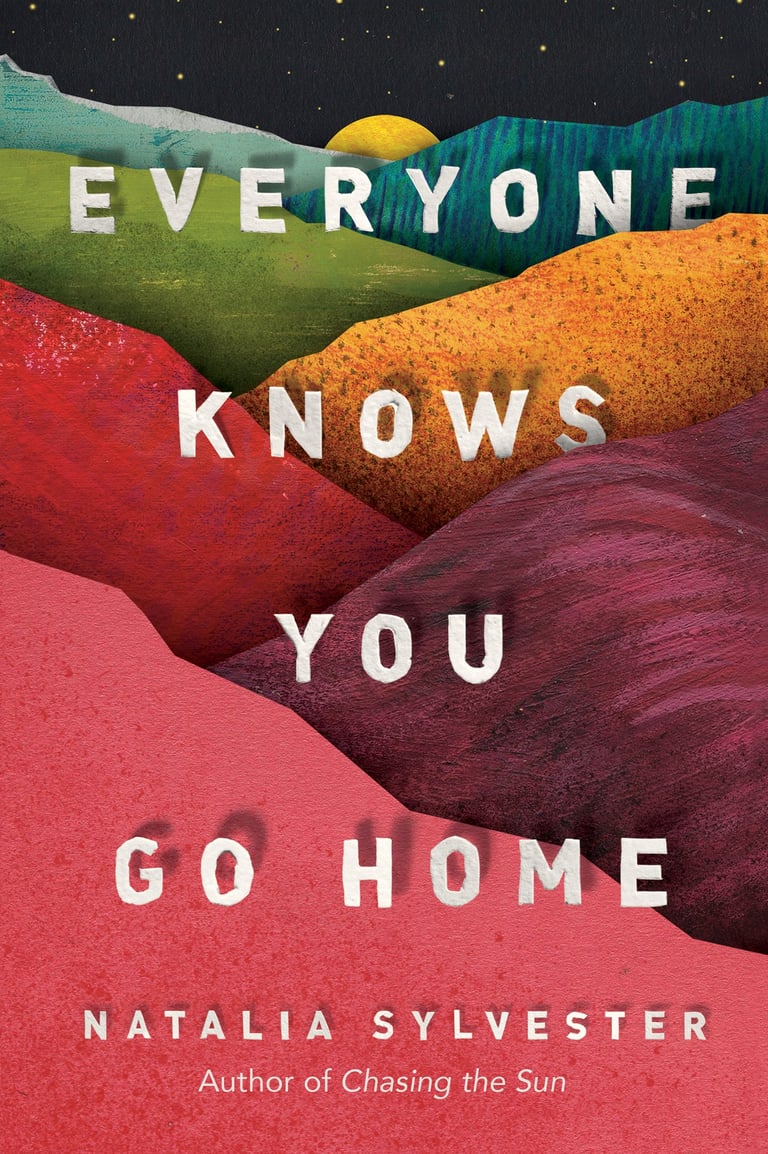
I’ve known for a long time that my debut novel would be one of those stories. How could it not? It was born seven or eight years ago when I was still a senior in college, then it sat in a drawer, waiting for me to finish writing it. When I finally pulled it out and rewrote it last year, I often referred to it simply as the kidnapping story. By the time I felt ready to show it to my agent, I had a working title that I was very open to changing. We brainstormed back and forth and decided on Where We Once Belonged before submitting it to publishers. And that’s the book that sold.

If you think of a story as a living, breathing thing, then this one has certainly lived many lives. It’s been reinterpreted and reinvented and rediscovered, and although at its core it’s still the same—a story about what extremes love and hope can survive—it’s not the same story I started with. To me, that’s the beauty of it. It’s grown and helped me grow in the process.

So when both my editor and agent suggested that we keep considering new ones, it felt like a chance to discover this book in a new way again. I kept stepping back, looking at it from every angle, playing with words and titles as if they were dresses I was holding up to a mirror. Is this you? Does it fit? Only this time, I had new eyes and input from Liz and Brandi, and I’m so thankful for their fresh perspective.

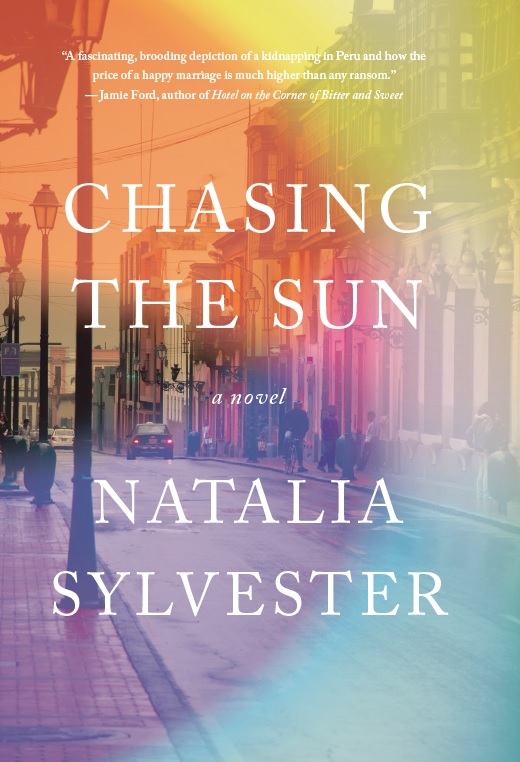
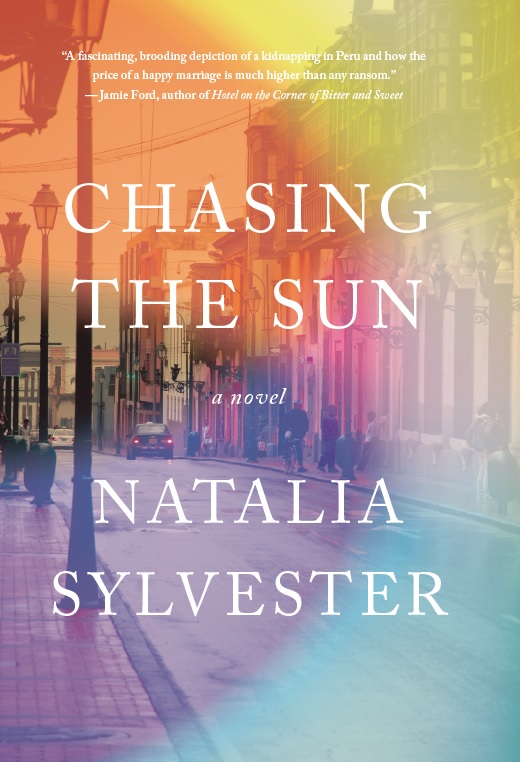
Many drafts, years, and titles later, my book finally has its name: CHASING THE SUN.


I got very sentimental this New Year’s Eve as I thought about letting go of 2012, a year in which some of my biggest dreams came true. It wasn’t just about my book; it was about E’s graduation, the grand finale to one of the first and biggest risks we took together in our lives as newlyweds. It was about watching our family grow, and moving to new places, and in many ways, saying goodbye not just to the past year, but to the past three, an era which 2012 saw draw to a close.

I thought, “2012 was good to us.” And then I realized none of what we accomplished last year happened in just 12 months. We worked and dreamed about some of these things for years before (in some ways, maybe decades) and the beauty of time passing and accumulating is that you never know where a milestone will land. Right now, we’re all reveling in the newness of 2013, when in fact, years from now, we’ll probably measure our lives not by years, but by the things we did that made us feel alive. Whatever we all need to do to make these next 12 months memorable, I wish us all the courage and dedication to do so.

Now, for some mini-updates…

I read a great post on Lindsey Mead’s blog about choosing words instead of resolutions; one word to define and live by in 2013. I don’t know what my word will be just yet, but I’m sure I’ll know it when I see it.

There may be a few changes coming to the blog soon. You might have noticed I didn’t do a Fresh Ink interview in December, and unfortunately I just didn’t have the time. With edits on my book due soon, freelance work getting busier, and my tendency to want to do shiny, new things and chase other opportunities, I’ve realized I need to redistribute my time. But I love doing Fresh Ink, and will continue to do so every other month instead of every month. I’ll also continue posting reviews for the She Reads book club, which has helped me discover some wonderful reads.

I’ve created a Facebook author page and would love it if you joined me there and helped spread the word to friends. I’ve found it’s this perfect sweet spot for thoughts and reflections that are too long to tweet but don’t warrant an entire blog post. And I have a few fun things planned there in the coming months that I hope will help us all get to know one another better.

My blog-baby turns two on January 12, and like last year, I’ll be celebrating with a giveaway. Last year, I gave away The Book You Most Want to Read, and it was such a big hit that I’ll be doing so again, but I thought it’d be fun to toss in an extra prize—2 for the 2 years. Check back on January 12 for more details.

Happy New Year, all. Hope it’s off to a great start!

photo by: martinak15

This is the fourth and final post in a series about the process of having a book on submission (you can read part 1 here,  part 2 here, and part 3 here). 

Written on September 9, 2011, after one of those rare moments that keep writers writing, when I was revising my next book that’d eventually sell. 

I just wrote a scene that made me think that if my first book doesn’t sell it’s because this book was meant to be my first. There is still faith, buried somewhere beneath words that may or may not have been written yet. I guess I’ll have to find it.

This is the second in a series of posts about the process of having a book on submission (you can read part 1 here). The following post was written in June of last year, when my book was first being shopped around to publishers. For those who are new to the blog, though that first book didn’t sell, the second one did. I hadn’t read this post in a while, and it almost feels like a letter from past me to future me, doesn’t it?

Today I learned that there’s actually such a thing as a good rejection. If someone had told me this months ago, I would’ve rolled my eyes and said, “Whatever. A no’s a no and it sucks harder than a Dyson in the desert.”

Rejection, no matter how you present it, hurts. I’m not writing this to take away from this fact. We all deserve to be acknowledged for putting ourselves out there—huge, raw chunks of ourselves, because even when the work is fiction it’s still a part of us—and I’m not about to shrug off all the hard work and pain that goes along with trying to get published by saying something like, “Cheer up. At least you’ve come this far. A lot of people never even finish a book! You should be proud and happy for that.”

Because that’s true. But that truth doesn’t make rejection any easier.

Today I got an email from my agent containing the passes from our first round of submissions. We’re still waiting to hear back from several editors, so this is just the initial feedback, and it doesn’t mean that there’s still no hope for the first round of submissions (this is what I keep telling myself, over and over). Someone who hasn’t responded can still say yes (repeat three times, then keep writing).

I didn’t know what to expect when I opened this email. On the one hand, she mentioned that I got a lot of praise on the writing overall, but that I should read the feedback at a time when I’m feeling “confident, open-minded, and willing to grow.”

“Yes, yes, that’s exactly how I feel right this instant!” I told myself. (Because let’s be honest, was I really going to wait another second to read the feedback?)

So I read the rejections. They were no’s, but they weren’t terrible. There was some really good feedback, by editors who had read my book and were referring to my characters by their names and had given enough thought to the story to cite details that I remember writing at 5:30 in the morning 2 years ago in a previous apartment, way back when I never would’ve imagined that my book would land on an editor’s desk. And for every bit of constructive criticism I got, there was another editor who had something positive to say about that specific element of the story. Just goes to show how subjective it all is. What one person loves, another won’t connect to. And I’m okay with that.

Here’s why it’s so important to have a support group when you’re a writer, and especially when you’re out on submission.

Because if I didn’t have my writer friends’ voices, and the voice of my agent, saying that they loved the book and they have faith in me, then reading an editor’s words on how they weren’t completely engrossed in the story would have been devastating. I might have been in tears, might have wanted to give up, and might have questioned my sanity and my worth as a writer.

Instead, for now, I’ll hold on to the good stuff. There are gems in those letters. There are pieces of feedback that are flattering beyond my wildest dreams, words that I never would have imagined someone in publishing would say about my writing. And there’s criticism on how I can improve, which is what we all need, no matter how much it might hurt.

So this is what I mean by a good rejection. A good rejection is still a no, but it doesn’t strip you of all hope. It’s like running into someone along the side of a very long road you’ve been traveling on. You stop, hoping that this is the end, that you’ve arrived, because you’re so exhausted you’re about to call it quits. And they see this and are kind enough to give you some direction, and they tell you, “Sorry, this isn’t it. But keep going because you’re on the right track. We can see it, can you?”

photo by: Matt Callow

It’s kind of like Fight Club. The first rule of being on submission is: you do not talk about being on submission. The second rule of being on submission is: you do not talk about being on submission. No one tells you this explicitly. My agent never emailed me saying, “This is the part where you shut your mouth, okay?” But common sense (and for me, a little bit of superstition) says that you don’t talk about things that haven’t happened yet. Especially really, really big things that you really want to happen.

So if your book is being shopped around to publishers, you don’t blog about the almost-yes’s or about how long you’ve been waiting (it’ll always feel like an eternity anyways, even if it’s just a week). You don’t tell Twitter friends if one publisher has shown interest in your book for fear that they’ll change their mind and you’ll have to turn around and tell friends, “Oh, false alarm.”

You don’t put all the insecurities that come along with being a writer on submission out there because you have Thick Skin and you will wear it like a badge of honor. You sit and wait quietly and patiently, trusting in the support system of close friends, family, and your agent. When you finally have news, you share it.

Except I kind of cheated. Somewhere along the way before my book sold, I wrote blog posts about being on submission, about the sting of rejection, about the obsessiveness that sometimes came over me, and the things that kept me going. I just never published them (until now).

Over the next several weeks I plan on sharing these secret posts with you. There seems to be a lot of information out there about what it’s like to query agents, but not much about what it’s like to have your agent submitting to publishers. And while there’s a lot of overlap between the two experiences, in many ways they’re completely different. There’s the excitement of being one step closer to that elusive book deal, of having an agent on your side. There’s the agony of knowing the number of publishers you can submit to is finite, that you can’t just keep trying tens or hundreds more till you find the one, like many of us do when searching for agents.

During the year and a half that I was on submission, I felt so close! (awesome) and yet so far away (major bummer) from my goals. I was caught in what I eventually called the “hope and mope cycle” (E deserves a medal for putting up with me). There were days when I appeared perfectly calm but on the inside I was moping around like this:

There were days when the hope was like a drug—it kept me elated and high, only to make me crash when it was nowhere to be found, replaced entirely by fear. I thought the worst thing that could possibly happen was that my book didn’t sell. And when it didn’t, when Brandi and I started talking about the next book, about starting this process all over again, I realized I was wrong. The worst thing that could happen wasn’t my book not selling, it was me not writing another one. And another one. And even another one if those didn’t sell.

One day, when I was feeling particularly hopeless, my best friend since high school put it this way: “So? You’re a writer. Wasn’t your plan always to write books? Plural? Not just one?” He’s a bit of a smart-ass, that one. But he was right.

So I started writing another one, even as the first one was still on submission, and a strange thing happened. I realized that the fear of my book not selling was actually a fear that I only had one book in me. Each day that I wrote, I chipped away at it. The new story became my new source of hope, and unlike that needy, nagging hope I’d had previously, this one was steady and nurturing.

I went from being a writer on submission to being a writer again. A writer, writing. Imagine that.

Related Posts Plugin for WordPress, Blogger...

« Older entries